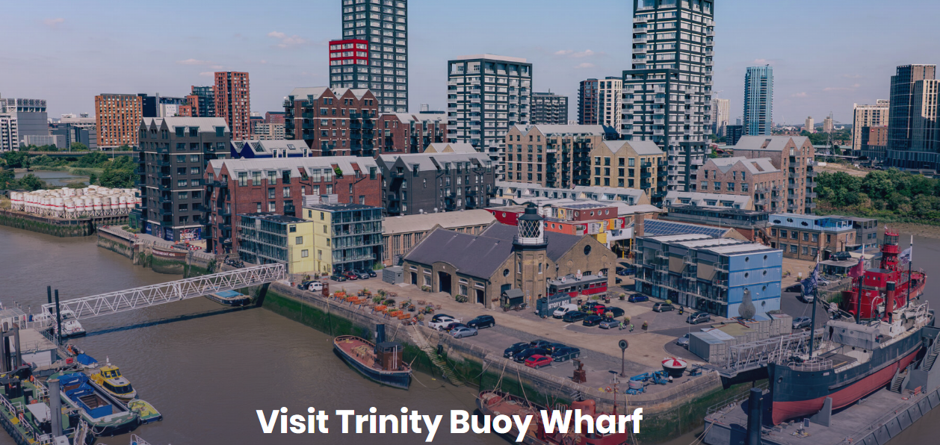
What do the following have in common: a lighthouse, 234 Tibetan Singing Bowls, and a computer booted up on 1st January 2000? Oh, and maybe Canning Town tube station is a clue. If you have seen the film ‘Rogue Agent’ with James Norton then you’ll have got it already.
And this is what the four of us: Margaret, Maggie, Richard, and myself are off to explore on Sunday 27th September 2026.
As you probably guessed, the starting point is Canning Town in the east end, not immediately associated with a ‘Day Out’. Arriving at the tube station via the Jubilee line and exiting the station we see the sign we are looking for. It’s called ‘City Island’ and we’re on the pedestrian bridge and over on the island in a couple of minutes. Actually it’s not really ‘an island’, more like ‘almost an island’. It’s where the river Lea does a sharp meander before joining the Thames, creating a slip of land that’s only just hanging on to the rest of the country.
This part of the island is now yuppie-land. High-rise apartments, views along the Thames, and easy commuting to the City. We stop for refreshment in the smart café-cum-restaurant built into a high-rise and watch healthy young Londoners jogging by the river or on their way to the gym.
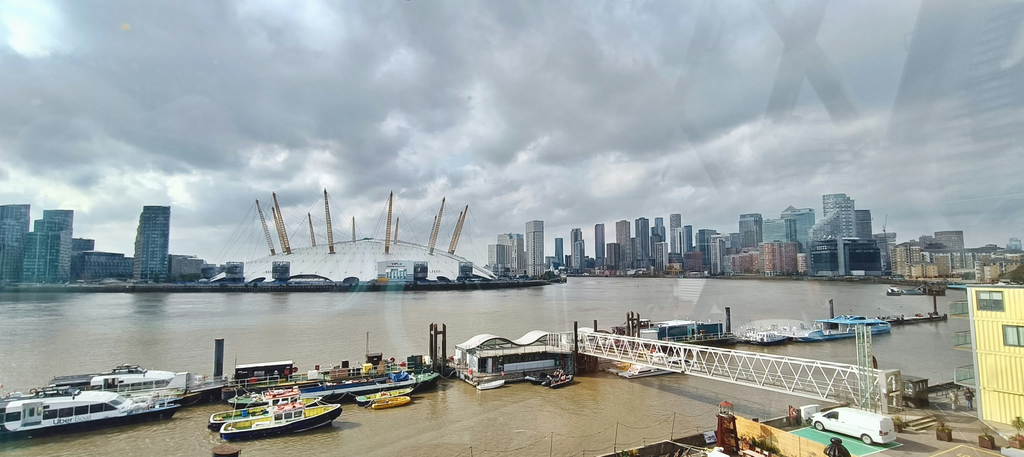
We follow the island footpath along the bank of the river Lea. The tide is out so the river’s ugly secrets are visible in the mud. They’re not supermarket trolleys here, for some reason it’s where unwanted bikes find their resting place – there seems to be one every few yards. Finally we come to Trinity Buoy Wharf – the end of city island where the Lea joins the Thames.
Trinity Buoy Wharf was responsible for supplying and maintaining navigation buoys and lightships between Southwold in Suffolk and Dungeness in Kent. The Experimental Lighthouse, and its neighbour the Chain and Buoy Store were built in 1864 and were in constant use to test maritime lighting equipment and train lighthouse keepers. The roof space adjoining the present lighthouse housed the workshop for the famous scientist Michael Faraday.
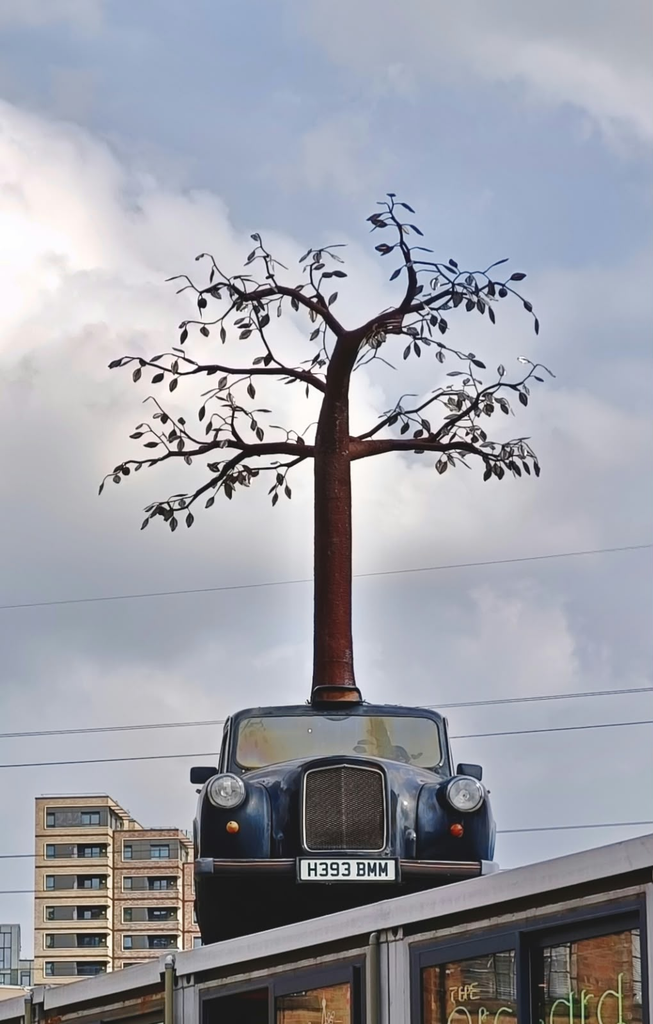
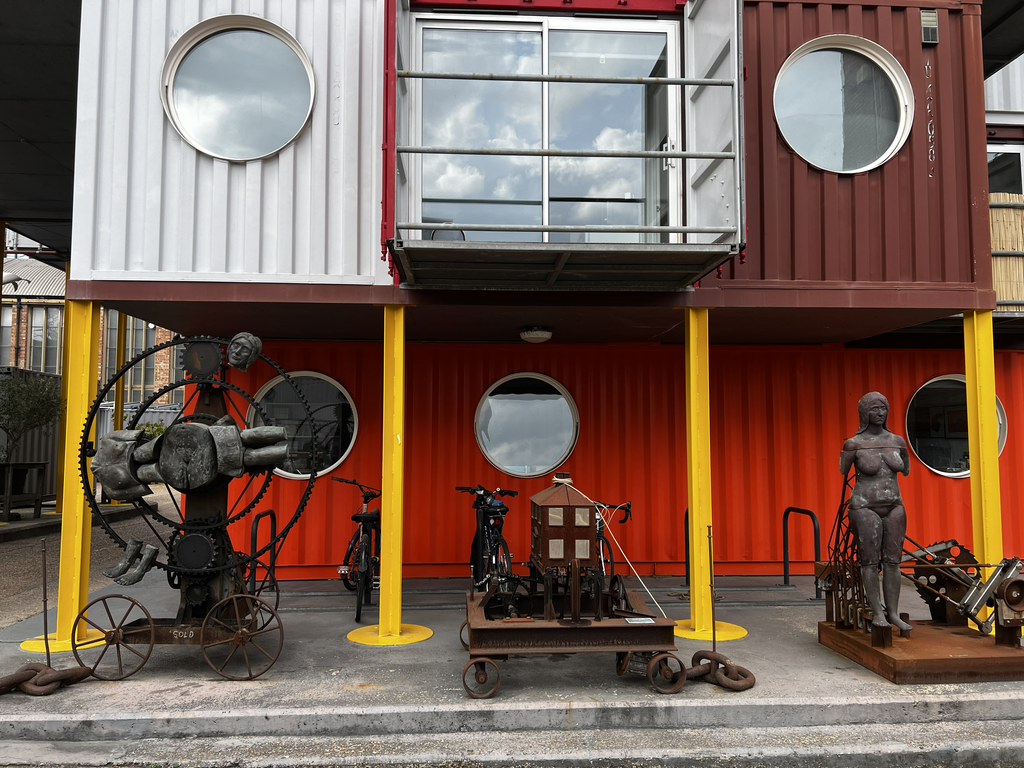
Today the wharf is a bustling creative centre for artistic and inventive people. There is evidence all around – the iconic lightship know as ‘Lightship 95’, originally marking the Goodwin Sands, is now moored at the end of the wharf and used as a recording studio. Men are doing interesting things with wood and metal and guys are working away in their pods in Container City. The area displays many of the whacky inventions all around – an open-air art gallery.
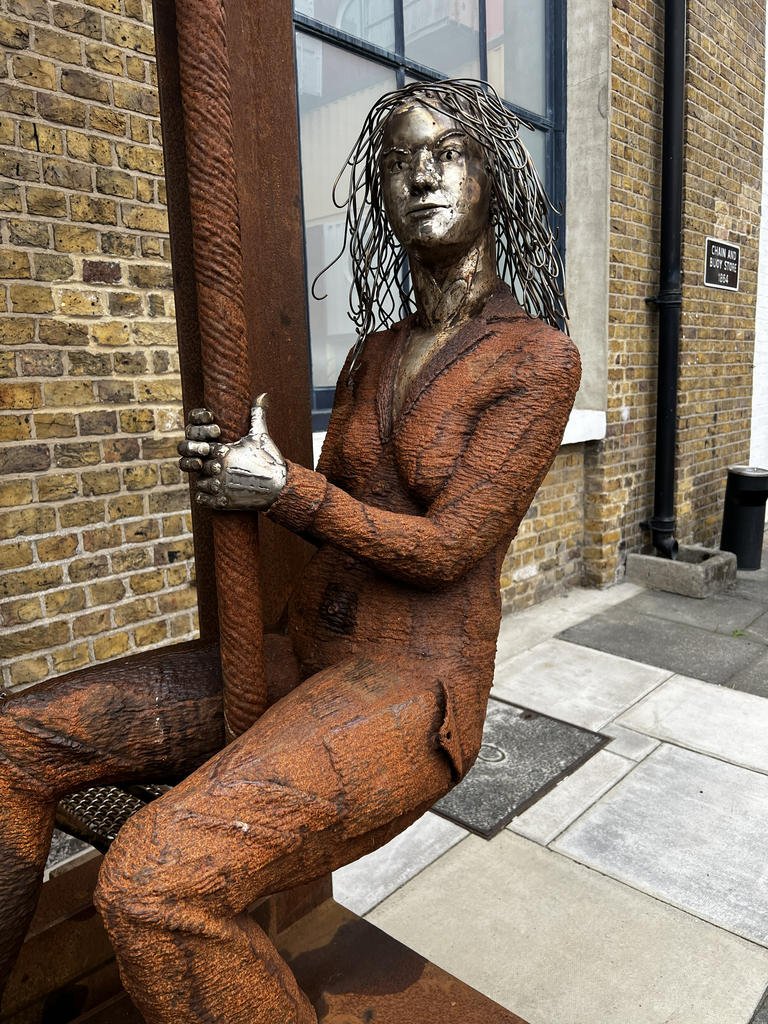
There’s an exhibition of drawings from a recent competition which has us absorbed in the creativity and painstaking detail. How long, we wonder, did it take the artist to draw the sea – just the sea, every wave, and so totally realistic?
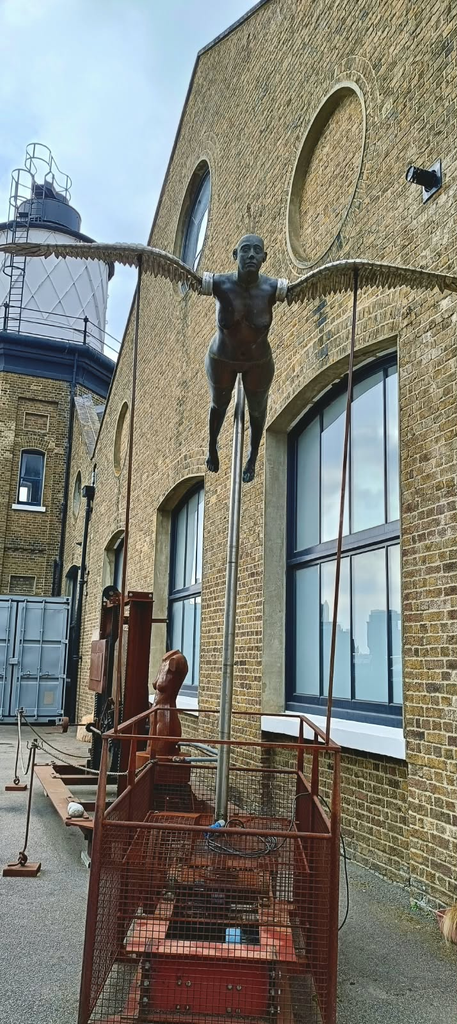
Then there’s the old lighthouse, now given over to the display of Tibetan Singing Bowls and their computer-generated sound playing variations which will never repeat for 1,000 years. Or that’s the theory – assuming the computer doesn’t need to re-boot at some time before 31st December 2999. And assuming we are still using the same date and time system by then, and assuming the lighthouse and the Wharf still exist, and assuming the message about the singing bowls has got through, and assuming……….
Still, it’s a nice story.
We chat to the girl looking after the bowls for the day. She’s a student at LSE and this is a part-time job to get her some income. We make a charity contribution for the upkeep of the lighthouse, keep the Tibetan Bowls singing for a few hundred years, but mostly to make sure the nice LSE girl can eat again tonight.
We finally prise ourselves away from the Wonders of the Wharf and head for our next East End discovery – the mural for the Battle of Cable Street. It’s a short hop on the Docklands Railway from East India Dock to Shadwell followed by a walk west along Cable Street to the mural.
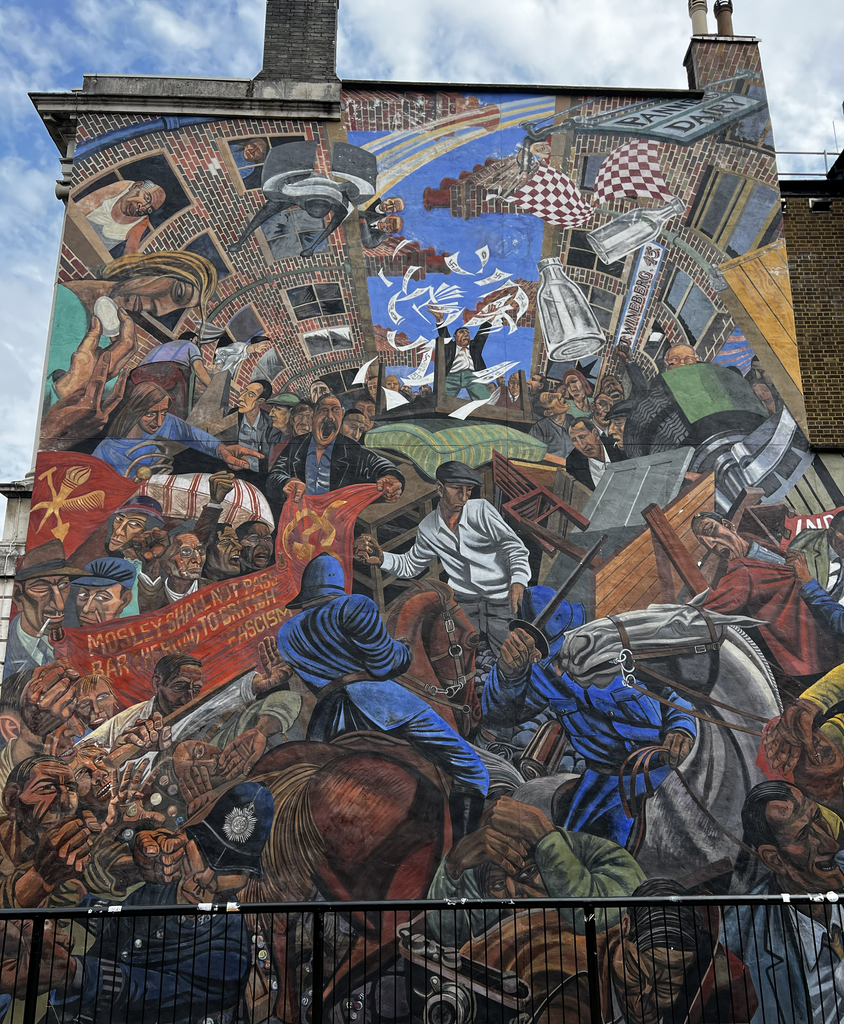
The Battle of Cable Street was a major anti‑fascist mobilisation in response to a planned march by the British Union of Fascists (BUF) – the ‘Blackshirts’ – led by Sir Oswald Mosley. The BUF had become increasingly antisemitic and chose the East End—home to London’s largest Jewish community – for the march on 4th October 1936 to mark the organisation’s anniversary. There were around 3,000 Blackshirts but an estimated 250,000 local residents turned out to stop the march after the Home Secretary refused to ban it. Barricades were erected along Cable Street using furniture, carts, and debris. Police attempted to clear routes through Aldgate and Cable Street but were overwhelmed by crowds and resistance. Eventually, police instructed Mosley to abandon the march through the East.
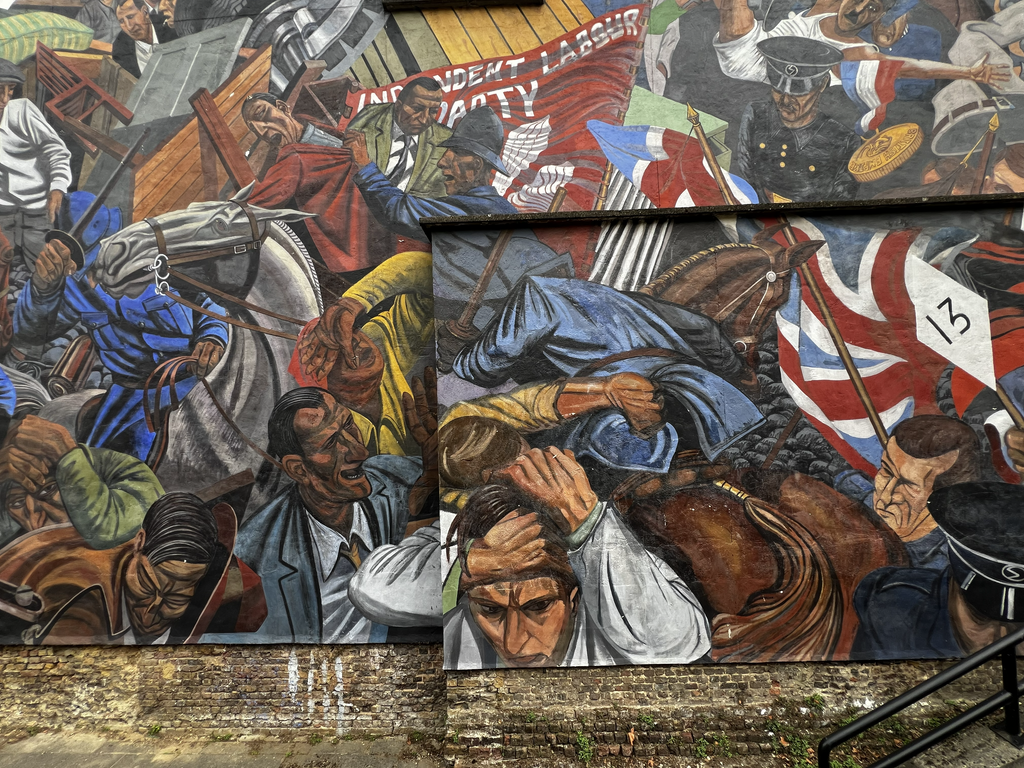
The event became a lasting symbol of community resistance to fascism and antisemitism and happily the BUF’s influence declined after 1936. The battle is commemorated annually and we happen to be here just a week before the 90th anniversary. We chat to an interesting guy who seems to know a lot about the history of the battle and who is coming on his bike again next week for the anniversary, along with the rest of his North London cycling club.
The rest of our day seems to be spent eating. From Cable Street it’s a short walk to St Katherine’s Dock where we have lunch overlooking ‘Gloriana’ – the Queen’s beautiful row barge from the Diamond Anniversary of her Coronation in 2013. And in the evening we have a return visit to ‘Benares’ in Berkeley Square for a deliciously flavoursome Indian meal.
It’s been a great day – some of the best of London East End and West End. What can we possibly follow it all with? Well, back to Earls Court, switch on the TV, and watch ‘A Tribute to Dolly Parton’ of course.