(with apologies to Robert Browning)
We’ve been in the lovely city of Riga for three nights and are now moving on to Tallinn, 300km away on the Black sea and the capital of Estonia. How to get from one to the other? Flying seemed too easy and uninteresting, and taking a bus sounded boring. Taking the train was the favoured option until we heard about the ‘Riga-Tallin sightseeing bus’. It’s a minibus guided tour that takes 12 hours but you get to see and learn more about the Baltic States along the way. So that’s what we are doing.
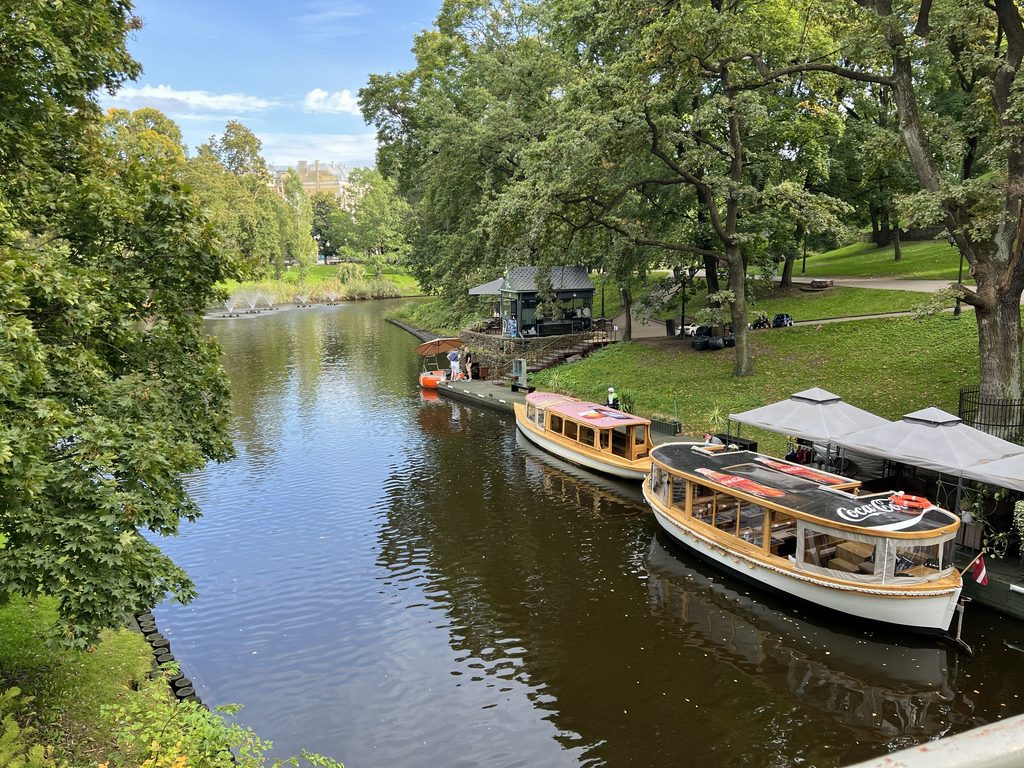
We leave the Grand Poet Hotel soon after eight in the morning and walk with our cases across the park and through the Riga Old Town to our meeting place at the ‘Aussie Backpackers Pub’ on Valnu Street. We are soon joined by Dru, a retired American lawyer who moved to Spain with her husband when they didn’t like the way the US was heading. And Kate who, despite living in Australia, seems to do more travelling around Europe than most of us. There are just the four of us, and Dru and Kate turn out to be good company on the day’s travels.
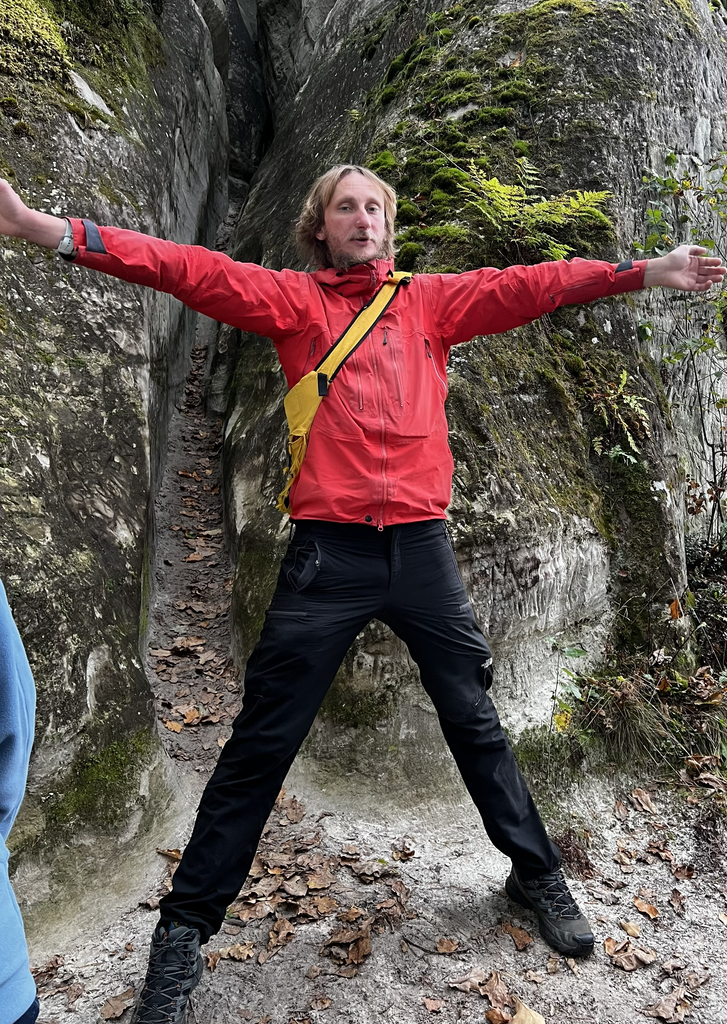
At nine on the dot the minibus arrives with Kullo – our Estonian driver and guide for the day. As soon as Kullo steps out onto the pavement we know it’s going to be an interesting day! How to describe him? He’s tall and thin, lanky you could say, with just-out-of-bed hair flowing freely on head and face. His arms and legs stick out randomly and independently from his body as if controlled by a giant puppeteer above him. At various times during the day his body will suddenly jump into a new contortion in front of us, and going through doors he will exaggeratedly bend double to ensure transit. He’s scruffily dressed and carries a yellow shoulder bag that’s only just still hanging together, threadbare. Kate, with motherly concern, wants immediately to find needle and cotton and help patch it up.
Kullo tells us, as if he wants to get this out of the way up front, that school didn’t hold anything for him, implying that he dropped out. But, as we discover as the day goes on, this belies his innate intelligence, his vast knowledge, and his ability to put it all across.
We get on board, Dru riding shotgun, and me, Margaret, and Kate lined up in the back. It’s a comfortable minibus, and a good ride, although Kullo’s concentration on the road ahead does wander from time to time, calling on some anxious back-seat corrections from Kate.
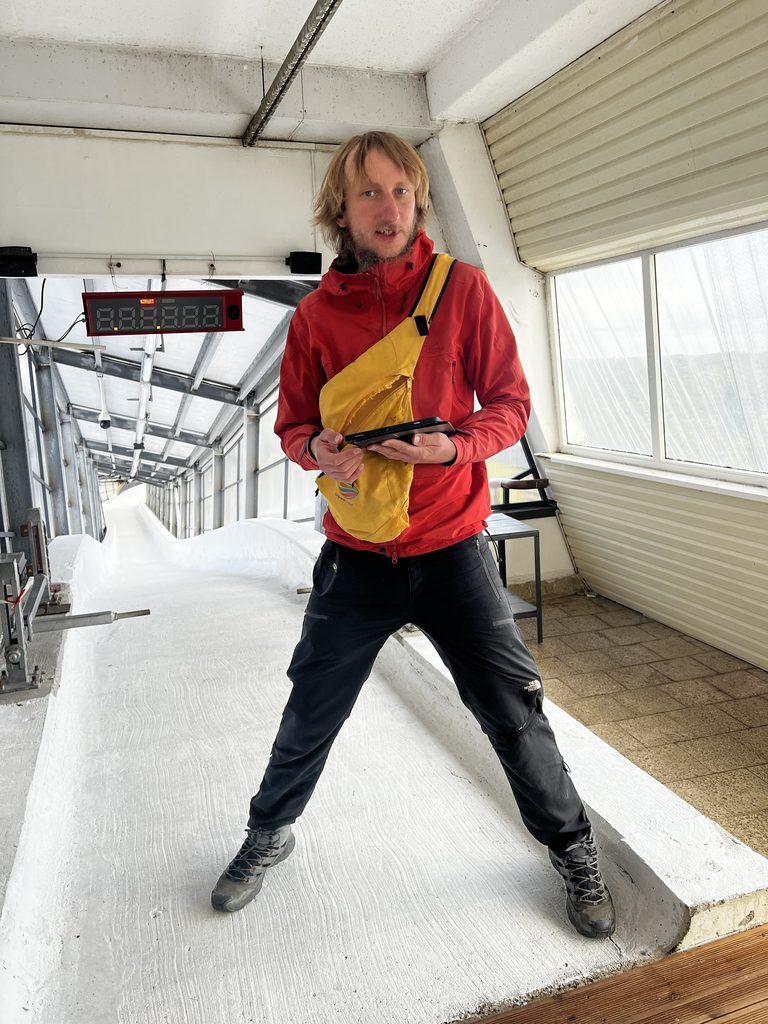
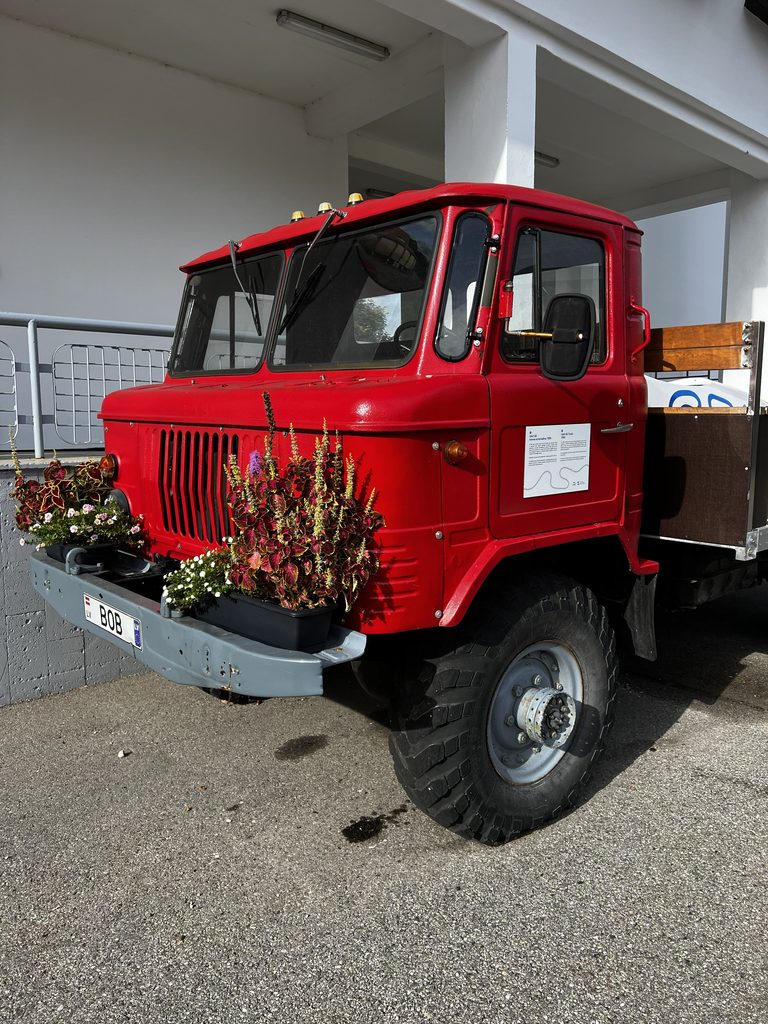
Our first stop, surprisingly, is at the Sigulda bobsleigh track. Built by the Russians in the 1970’s following embarrassing international winter sports defeats. Sigulda was chosen as the place to build the track because it had winter sport traditions and near-perfect topography. We take a lift to the top of the track and get to walk part-way down it. It feels a strange experience walking the track and imagining people hurtling down at crazy speeds – up to 90mph! The track has built-in refrigeration and is sprayed with water in preparation for events. In the grounds of the track is a museum-piece truck, big, red, and basic – very soviet-era.
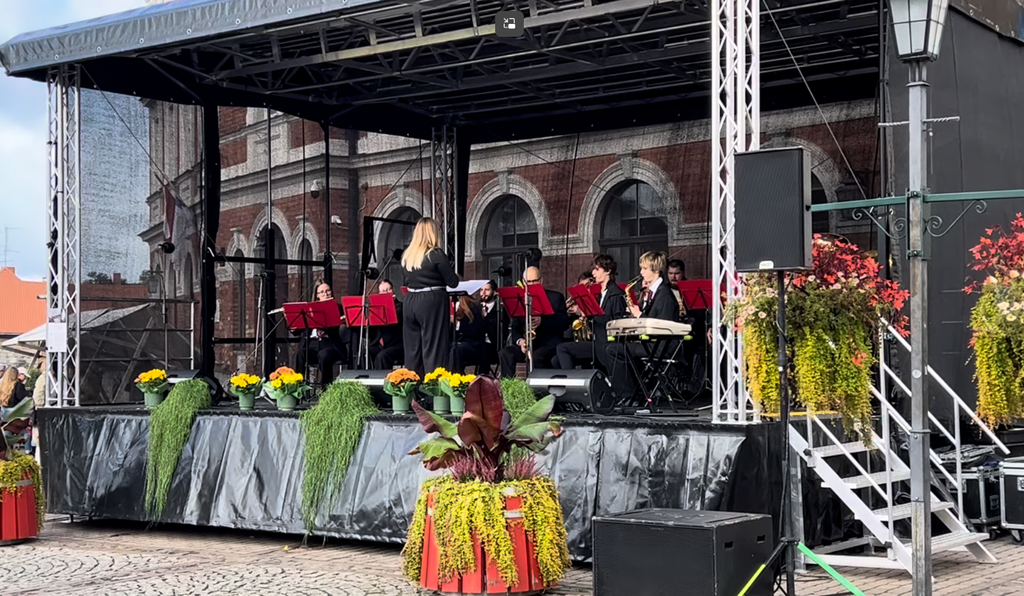
Our next step is the lovely town of Cesis, 90km from Riga. It’s harvest festival time here in town and Rose Square, in the town centre, has a stage with the local band playing.
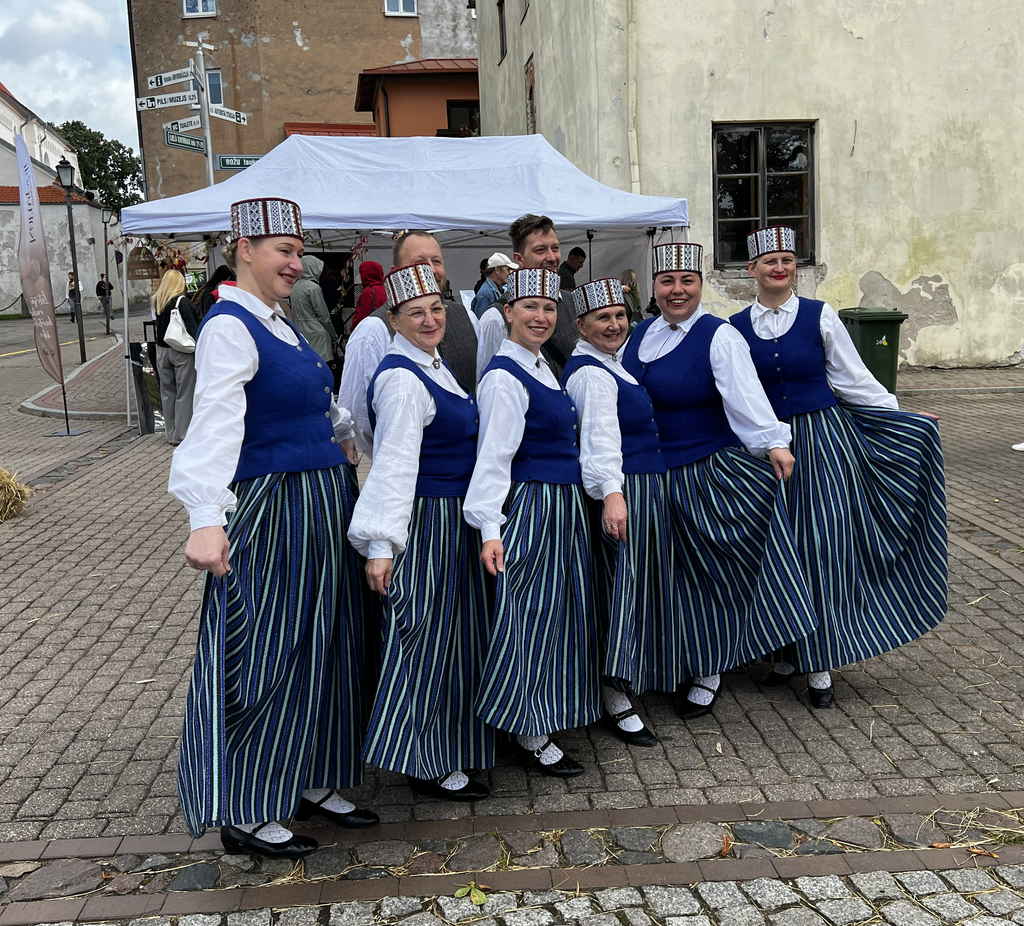
A group of residents in traditional dress are very happy to be photographed by us. There’s a friendly and joyful simplicity to it all which somehow captures the true feeling of Latvian hospitality, and for a while we are captured by the welcoming atmosphere.
Eventually Kullo leads us on to the town’s impressive medieval castle and a convenient toilet stop at the History and Art museum. Kullo leaves us to wander the grounds while he goes back to bring the bus and collect us.
After some more miles in the bus, Kullo takes us for a nature walk. To be precise, the Sietiniezis Nature Trail, a circular tour along the banks of the Gauja river. The attraction here is the sandstone cliffs where visitors have been proclaiming their love, scratched passionately into the stone, over lifetimes. It’s a good, energetic 1.5km walk high above the river, Margaret auto-recording her daily number of steps with enthusiasm.
Kullo takes the opportunity here to tell us about his great-grand-parents complete with photographs on his ipad – precariously held in that flimsy yellow shoulder bag without yet slipping through the stiches. The couple were communists and were imprisoned – he for ten years, she for 15 years. What was going on in the Baltic States at that time?
Estonia gained independence from Russia in 1918. But the communists were still active, not only in the Baltic States but across Europe. Following the ‘Hamburg Uprising’ and the Bulgarian ‘September Uprising’, the Estonian authorities decided to crack down on the small but very militant Estonian Communist Party. There were raids and imprisonments.
In 1924 there was a failed coup d’état attempt by the communists in Estonia, after which the entire Central Committee of the Communist Party of Estonia fled to Russia. But it was a tough existence as a communist – they were all killed during Stalin’s ‘Great Purge’! By 1938 the Estonian government felt confident enough to release the members of the communist party who were still in prison. Kullo’s great-grand-parents were released, got married, and proceeded to produce a Pro-Estonian-Independence and Anti-Russian lineage. Kullo now describes his great-grand-parents as ‘misguided’ in their faith in communism.
Kullo has been telling us about his sister who is a singer and has been playing her music in the bus. She sings softly, dreamily, perhaps an Estonian Norah Jones but softer and dreamier. She found Tallinn too large and busy and so has moved to Viljandi where she works as a waitress and lives in a flat above the restaurant. And Vijlandi is our next stop.
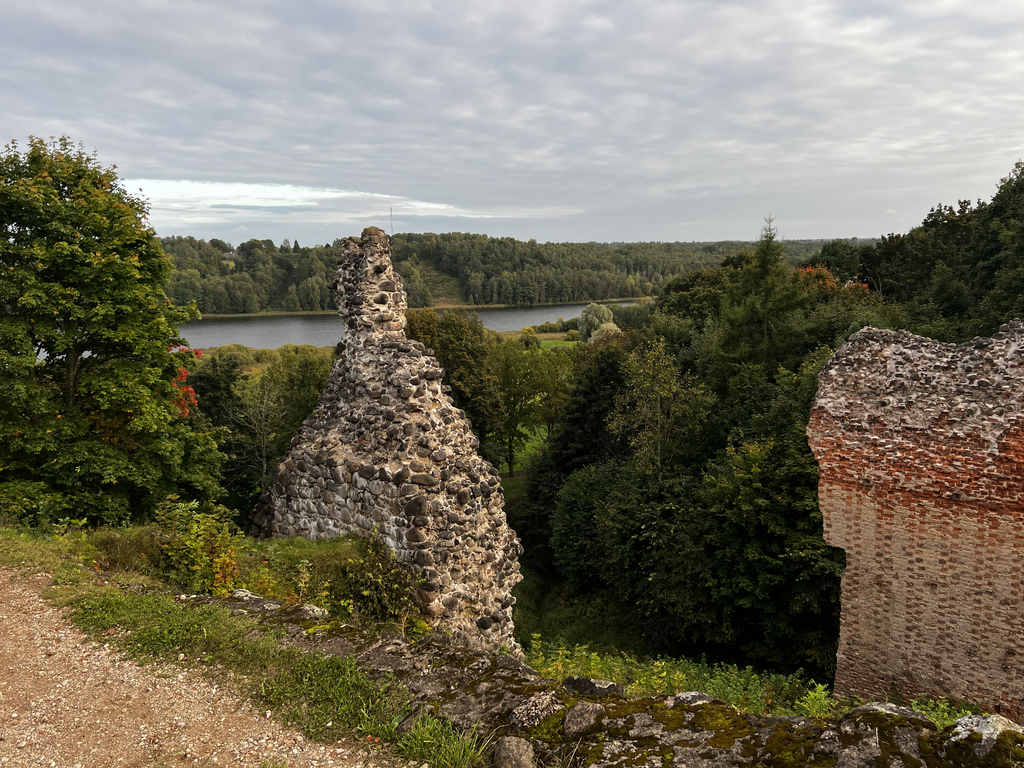
You can see why Kullo’s sister wanted to live here. There are the ruins of what was once an enormous castle, moat still intact. The high slopes of the Castle Hills offer views of the lake, making it easy to understand why this spot was once chosen for building a fortress. There’s a suspension bridge crossing the moat, and from the castle grounds there’s a lovely view of Lake Viljandi stetching far below. But, probably more importantly for Kullo’s sister, the town is famous for its music.
The tradition of the song festivals was born along with ‘Estonian National Awakening’ – that period in history where Estonians came to acknowledge themselves as a Nation deserving the right to govern themselves, culminating in independence in 1918.
But independence didn’t last long – by 1940 the Russians had walked in and annexed them again and the singing of the Estonian National Anthem (or any displays that Russia could call ‘anti-soviet’) was strictly prohibited. The occupation authorities instead forced communist anthems into the repertoire along with songs mandatorily glorifying the Soviet Communist Party and its leaders Lenin and Stalin.
Fast forward to the late 1980’s and resistance against Russia was rising again. Public song festivals became a key element of resistance, as tens of thousands of participants sang national and folk songs in mass gatherings. In 1989 two million people joined hands to form a continuous human chain across Estonia, Latvia, and Lithuania to symbolize unity and a popular commitment to independence. In 1990 the ‘Singing Revolution’ as it has become known, led to the Baltics declaring independence again.
We call in at the restaurant where Kullo’s sister works – ostensibly to see his sister and have a coffee, but mainly to use the loos. And it’s his sister’s day off so we don’t get to meet her.
Later he phones his sister from the bus. They have a brother-sister conversation in English while the rest of us listen in. A slight sense of relief when they finish.
Kullo genuinly wants to give 120% on the trip and now suggests a detour to see the Estonian Peat Bogs – a ‘must see’ apparently. But it’s getting late, we are all eager to get to Tallinn and so there’s a deafening lack of response to his suggestion. He correctly picks up the anti-bog vibes and motors off at speed to the city.
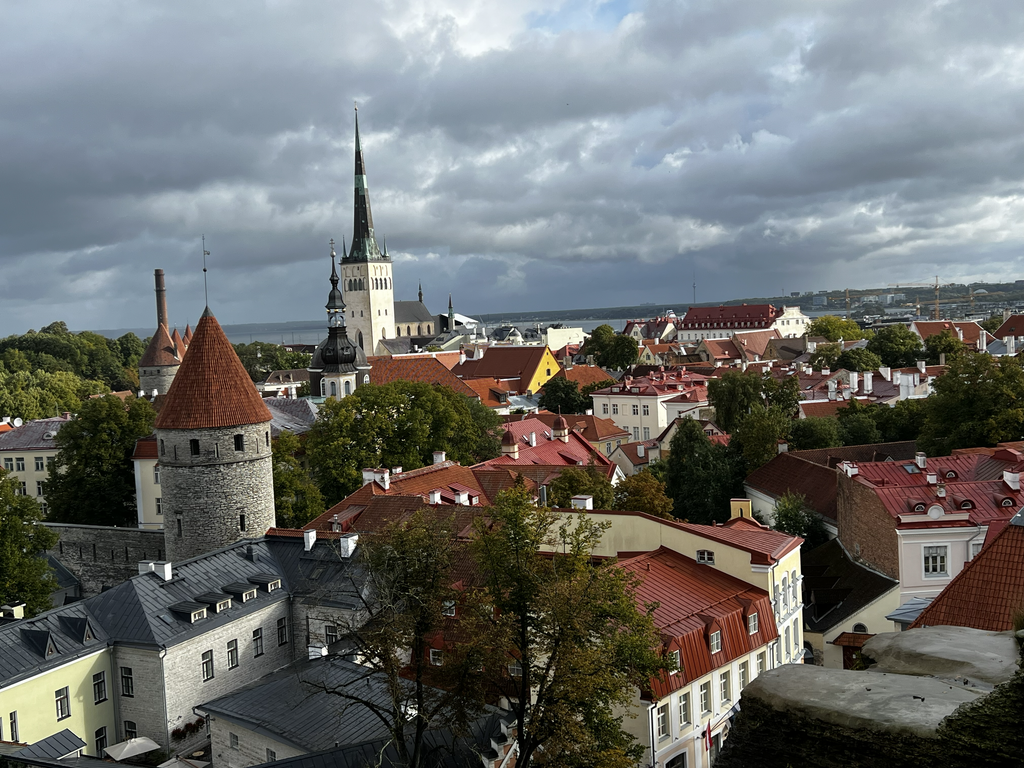
Kullo drops us at the Nunne Hotel in Tallinn old town – our ‘Boutique’ address for the next three days. It’s late, but the receptionist tells the restaurant to expect us shortly. The lovely ‘AME’ restaurant has a fashionably healthy menu and we eat a light, beautifully presented dinner.
Feeling healthily tired after the day’s activities we retire to our lovely bedroom, looking forward to discovering Tallinn in the days ahead.
_____________