“Why are you going to Ghent?” we are regularly questioned. Actually we are not quite sure. But we are sure that we are ready for a break from the flooded pastures of West Sussex, and we have a vision of Ghent as a nice place to visit. The only downside is that it’s almost still winter and we expect Belgium to be cold. So, on the basis that there’s no such thing as bad weather, only inadequate clothing, we are armed with winter thermals, gloves and hats. Oh, and string vest.
It seems like a few thousand other people are also taking the Eurostar from St Pancras and it’s not until the lunchtime Paris train has left that we can get a seat in the bursting-to-the seams terminal. Then, perfectly on time, we are boarding. The cartoon characters on the overhead TV screen in our carriage show us exactly how to board (too late, we’ve already done it) by putting one foot in front of the other up the two steps from the platform; how to press the button to open the door at our destination; how to climb down two steps; and how to break the window if all else fails.
We pull out of the station exactly on schedule (13:01) and travel smoothly and comfortably through London’s eastern suburbs, into the Channel Tunnel and soon we’re speeding through Northern Europe with grazing cattle in the Flanders fields passing us at an impressive 379kph.
From Brussels we take the train to Ghent. We had done the research on the tram system in Ghent and know exactly which tram line we need to get from the station to take us within a short walk of our hotel – the T4. There’s one arriving as soon as we exit the station so we jump on board. Then, with a little time to gather our senses, it dawns on us that the T4 goes in two directions from the station and we are probably going the wrong way. So we quickly jump off again, find the tram stop for the opposite direction, and sure enough there’s an immediate T4 in this direction too, which takes us close to our hotel.
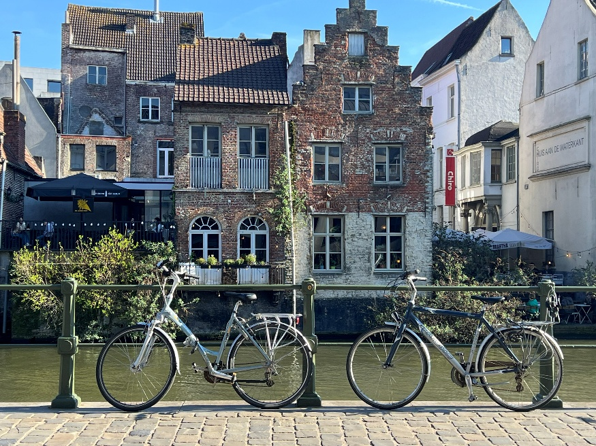
The hotel is in a great position – right on the banks of the picturesque canal with lovely buildings directly opposite. Our room is enormous. There’s a huge fireplace fit for an ox-roast, but other than that all is very modern, very high-tech. You just have to give the curtains a light pull and automation takes over – they glide quietly across the windows the full width of the room, under their own steam. The toilet is German, but Japanese style – fully automated with douche, dryer, and heated seat. A little perplexing to start with but we quickly grow to love it – don’t know how we ever managed without it.
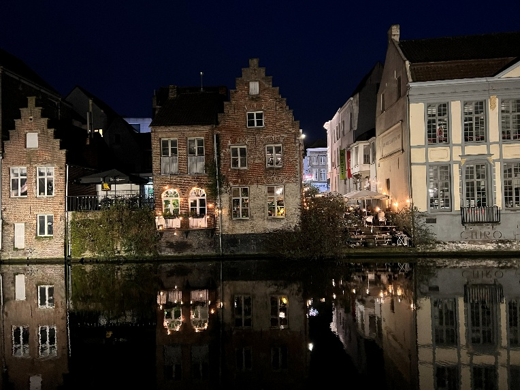
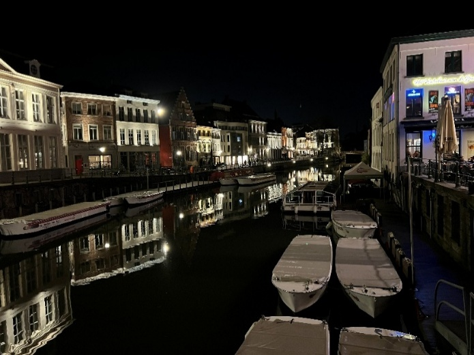
A short break to get organised and it’s out to ‘Roots’ restaurant, just a few minutes’ walk away. The Flemish architecture is charmingly reflected in the still waters of the canal which we capture on our ever-ready mobile phones.
Then it’s through the quiet back-streets to our cute restaurant – almost like eating in someone’s front room. It’s crowded, with seats for only 20 or 30, run by husband and wife. There’s no choice, it’s just whatever’s on the menu this evening. But there’s lots of individual courses, a kind of ‘tasting’ menu – smoked trout, chicken oyster, haddock, carrot, beef Belgisch wit-blauw, watercress, daikon, scallop, parsnip, ‘nduja, Canette duck, pumpkin, oyster mushroom, pear, butter ice cream, breadmiso, and caramel. All for 75 euro. Oh, and the most delicious home-made bread, continually replenished as we demolish it.
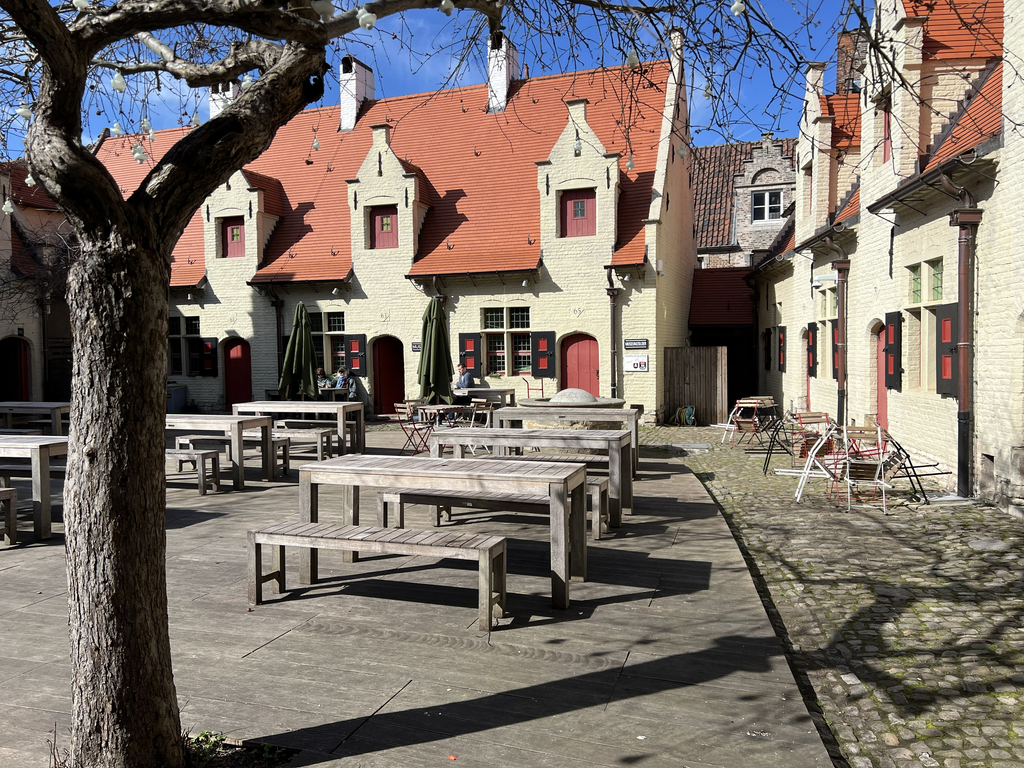
The following morning and it’s a walk around the oldest part of the city – right where the hotel is situated. First stop is The House of Alijn – once a children’s hospice and alms-house and now a museum of everyday life in Belgium through the ages.
There are tales of travelling circuses including bearded ladies, two-headed lambs, miniature husbands and wives, and Professor Wagner’s flea circus with harnessed human fleas moving miniature carriages and merry-go-rounds. The fleas had to feed on human blood daily.
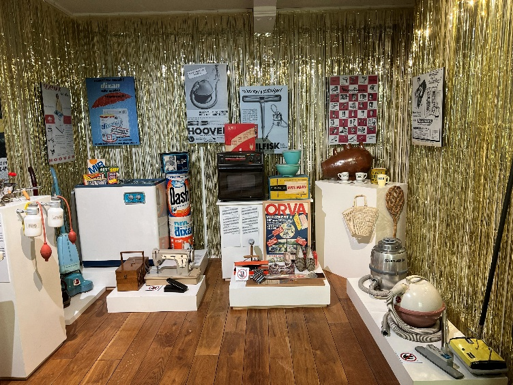
Oh and a bat preserved in formaldehyde. So all a bit weird really. But there’s also an interesting section taking us through the Belgian year month by month. There are some surprises: Sinterklaas (Father Christmas) comes on 6th December. And there’s the ‘ice-cream lamb’ which needs some explanation:- At a confirmation in Belgium this is the traditional desert – an ice cream in the shape of a lamb filled with raspberry coulis. The communicant has the honour of making the first slice through the lamb’s neck. The raspberry coulis filling makes it appear as if the lamb is bleeding, symbolising a sacrificial lamb. Sounds a bit weird to me.
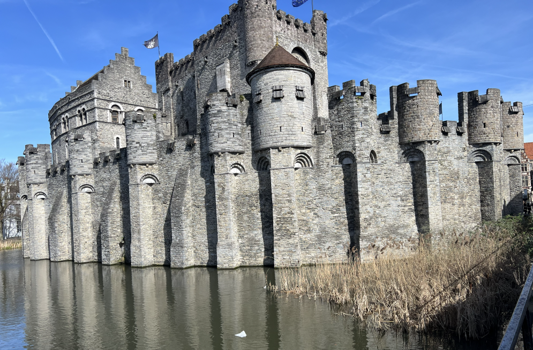
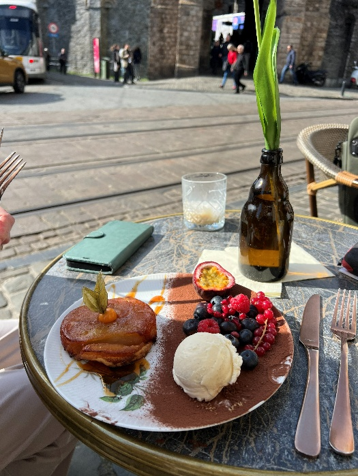
Then we take a pleasant walk to the castle where there’s a table for two in the sunshine at a small café that looks too inviting to miss. The coffee and a shareable tarte aux pommes is beautifully presented with ice cream and fruit and chocolate garnish.
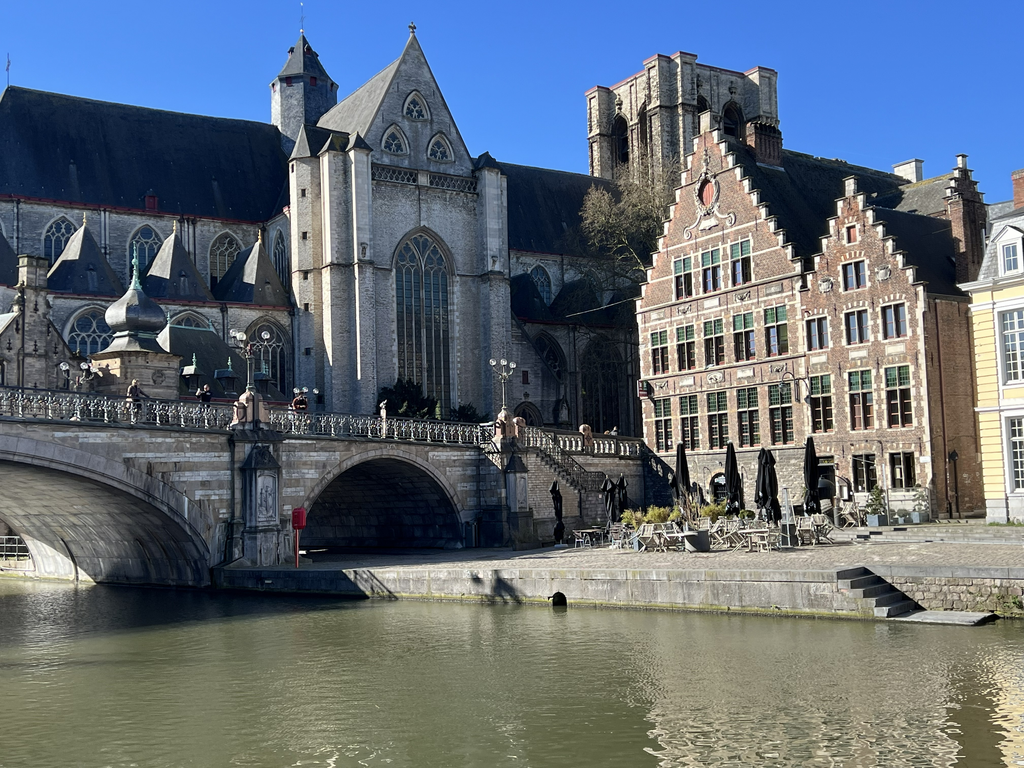
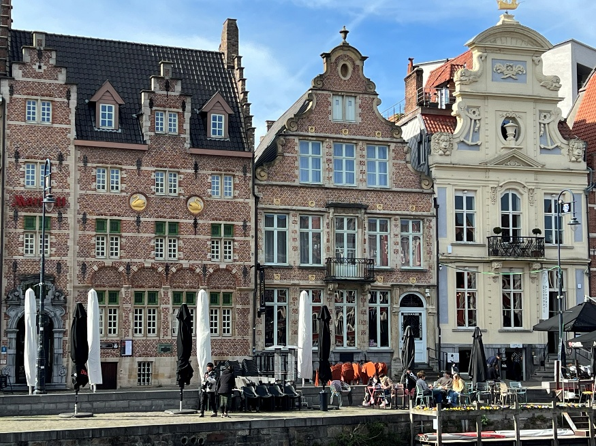
Then it’s a walk through the beautiful city centre along the canal bank. The magnificent buildings tell a tale of the tremendous historical wealth.
We find the restaurant where we are eating this evening – the ‘Parkhuis’ – in an old warehouse renovated in ‘industrial’ style providing an impressive home for the restaurant. We return in the evening to eat a delicious meal of fresh hake, perfectly cooked. At the next table is an American lady with her teenage son. They are from Ohio. The mum is trying to get her son to smile for her photo shot but he is being a teenager and won’t oblige. He has also decided that he doesn’t fancy the starter that he has ordered and mum offers it to us. I think I hear her bribing her son to eat at least some of it and he does finally scrape up a tiny morsel and chews unconvincingly. Mum tells us that they were advised to visit Ghent rather than Bruges because Bruges is now too touristy and commercialised and Ghent is a nice genuine alternative.
The following day it’s beautiful weather again – no need for the multiple layers we came armed with. We decide to walk to the Museum of Modern Art, on the far side of the city, beyond the railway station. It’s a lengthy but pleasant walk in the sunshine, along the banks of the canal to the museum – a large building in the park that was once a casino. The exhibition is rubbish. There’s not one thing interesting or likeable about it. It’s like a horde of kids have been playing here and hurriedly stuck a few scribbled paintings to the walls before they left. We think we understand now why the lady at reception had seemed hesitant and a little embarrassed to take our entrance fee. But the walk back – along a different canal (there are plenty to choose from in Ghent) to the city is enjoyable.
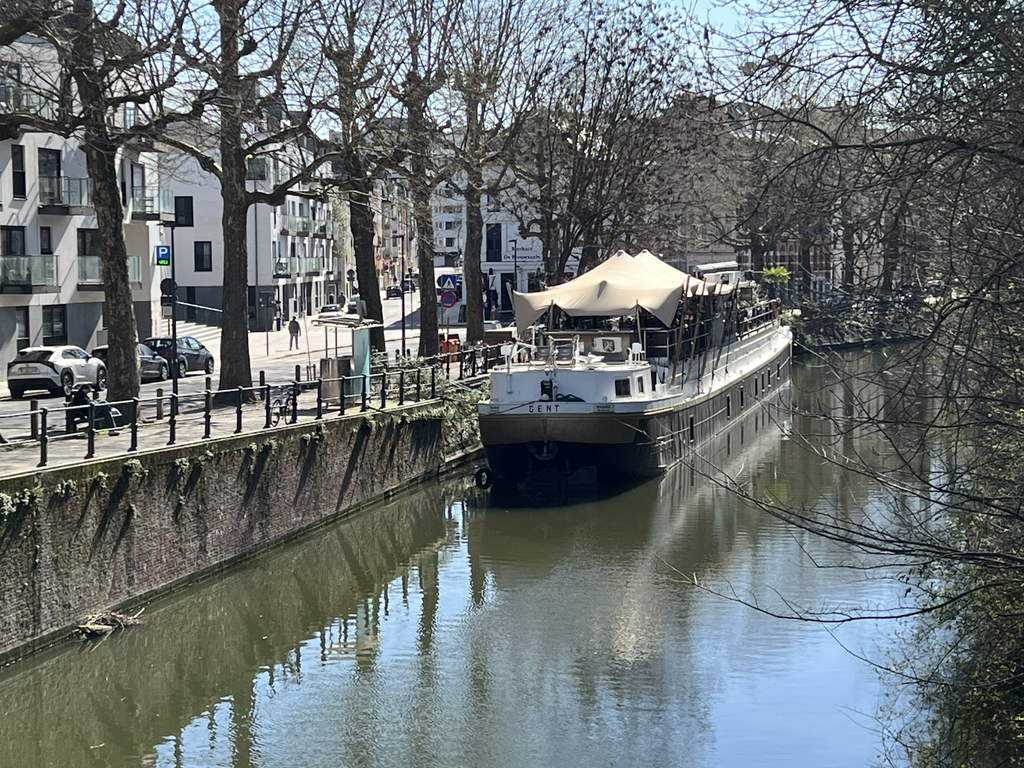
Tonight we’re going to find a pub with live music rather than going to a restaurant, so we want a decent lunch. Right next to our hotel, overlooking the canal, is De Parkiet – the perfect place. We sit outside, soaking up the sunshine enjoying a glass of Sauvignon Blanc and a delicious quiche.
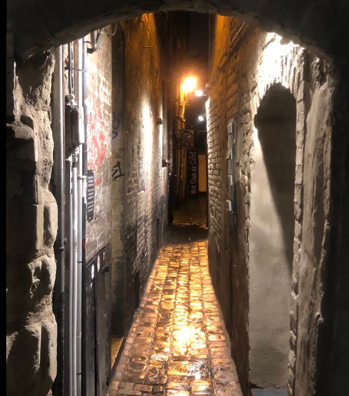
Our search for the music scene in Ghent takes us down a very narrow alleyway between two tall buildings. So narrow it’s impossible for people to pass so it has to be one-way traffic. At the end of the passage is a covered terrace leading to an inside bar which is packed like a tin of sardines. We grab the one remaining table on the terrace and get ourselves a large Belgian beer. The average age of the punters seems to be around 16, or it was before we arrived. We upped the average age by quite a percentage. The music also turns out to be a little immature, but we do get the entertainment of talking to Axel. Axel joins us at our table soon after we arrive. He is thirty or forty – something and admits to being more comfortable talking to us than to the junior crowds. He spends some concentrated time rolling his cigarette, and then we hear his life story. Although outwardly jovial and sociable, his story tells us of a sad person hiding within.
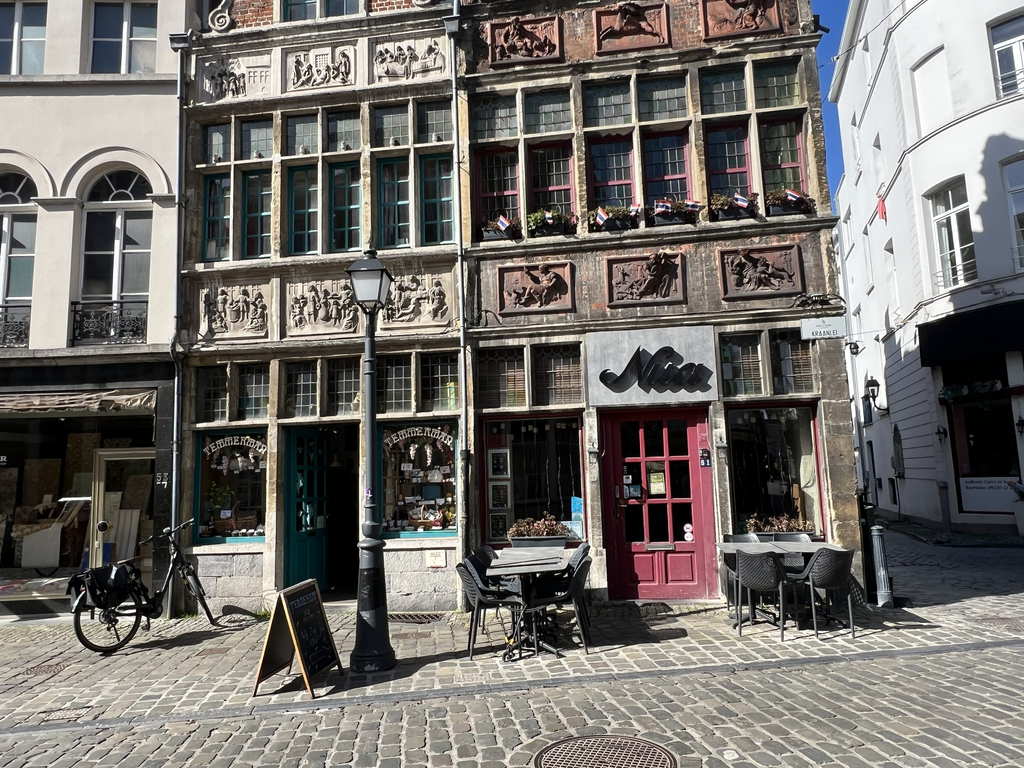
His parents, he says, were hippies and the family spent much of their early years in India. He married an Italian girl and lived for four years in Rimini helping out in his wife’s bikini shop. They wanted children but it didn’t happen, and he found Italian family life too demandingly claustrophobic that eventually, despite the attractions of working in the bikini shop, they divorced and he came ‘home’ to Ghent. He now services planes for Brussels Airlines (the airline that grew from the ashes of Sabina) and works the night shift all the time – by choice. He was once a regular at this bar but it seems that tonight is, now, a rare night out for him. It’s been interesting and enjoyable talking to him, with laughs along the way, but the lasting emotion we have is one of sadness.
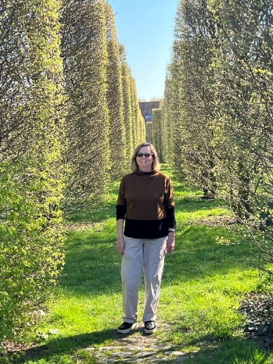
It’s the final morning of our time in Ghent and we walk through the city centre to Portus Ganda on the wide part of the river Leie. It’s another lovely day and we have a nice visit to the ruins of the St Bavos Abbey with an unusual hedge formation in the grounds.
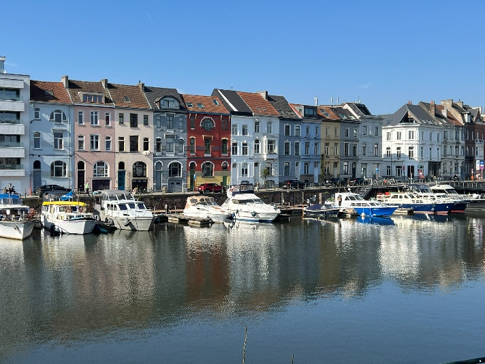
It’s a photogenic area – the river, the canals, the boats, the houses, and the abbey.
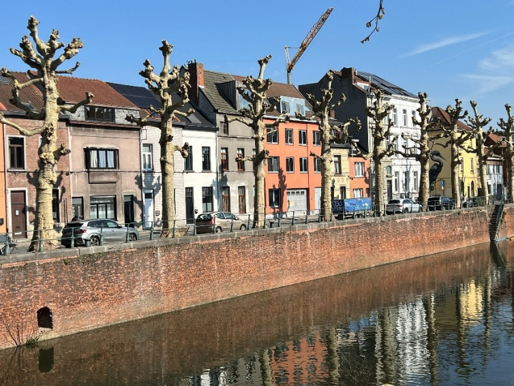
As we cross a bridge I’m eyeing up the next photo rather than looking where I’m going and I go over on my ankle on the uneven footpath and find myself flat on my face. Pity there wasn’t a video like the one on the train explaining how to safely walk across a bridge. I’m OK except for a sprained and swollen ankle. We just have to sit on the wall for while and enjoy the sunshine until I recover.
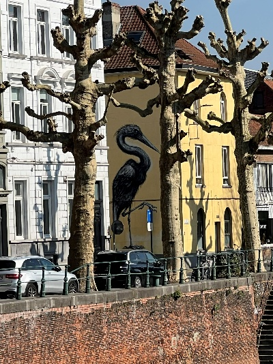
Then it’s back to what has become our favourite lunchtime cafe in the suntrap next to our hotel. The tables at this cosy little café are so close together that it’s almost impossible not to get to know your neighbours. We strike up a conversation with the young couple at the next table. He owns a bar with some friends just around the corner and tells us that if we come back in five years they will have a string of bars across the city. We promise to come back and that we’ll put it in the diary straight away. They are rolling their own cigarettes and we have an interesting conversation about the filters that you can get for own-rolled cigarettes. He shows us the packet and demonstrates. We tell him we didn’t have these in our day. They have to leave to go to work but no table hangs around empty for long here, and the table is immediately bagged by a couple of Dutch students who introduce themselves as Anna and Berber. They are here for six months and love the city. It’s very friendly they say (we agree!), more so than Amsterdam where, Anna says, the people can be somewhat arrogant.
Sadly it’s time for us to take our leave of this lovely city. it’s back to the hotel to pick up the luggage and a short walk to the tram which takes us back to the train station. The train is a fast one – non-stop to Brussels. The Eurostar lounge, unlike its Parisian equivalent, has plenty of comfortable seating. Our train is on time, and it’s back to London and Earls Court,
Ghent has been great – a friendly city, great food, very picturesque, historically interesting, and surprisingly for this time of year, lovely Mediterranean weather!